2026 Email Marketing Trends Analysis: Maximizing Campaign Efficiency
 USpeedo
 Knowledge Guides
 26 Jan, 2026
Introduction: The Sustained Rise of Email Marketing Efficiency
Across industries such as finance, e-commerce, gaming, and consumer services, Email Marketing has long dominated the ROI (Return on Investment) leaderboards, establishing itself as one of the most cost-effective tools for global customer acquisition and conversion. Latest industry data indicates that for every $1 spent on email marketing, it generates an average return of $36 to $42 (a 3600%–4200% ROI)—a level significantly higher than most Search Engine Advertising (SEA), Social Media Advertising, or Content Marketing channels. For brands, email is not just a tactical path for short-term sales conversion; it is a vital strategic channel for building long-term customer relationships and increasing LTV (Lifetime Value).
The core advantage that keeps email marketing at the top of high-return sectors is its unique attribute compared to social media: it is an Owned Media channel that brands can fully control. Therefore, unleashing the full potential of this channel has become the primary focus of strategy formulation and execution. In 2026, as email marketing evolves with new trends, it is essential to master its core logic and adapt to these shifts.
New Trends in Content Design
Hyper-Personalization
Email marketing in 2026 has moved beyond "generic mass mailing." Marketers now rely on behavioral data, consumer preferences, purchase history, and interaction paths to design differentiated content for every user. Key benefits include:
- Real-time content adjustment to match user interests.
- Higher Open Rates (OR), Click-Through Rates (CTR), and conversion rates.
- Predicting when users will interact and which products/services they prefer.
Traditional personalization—simply inserting a name—no longer suffices; advanced strategies now involve Predictive Content Delivery.
Click here to experience intelligent templated email writing.
AI-Driven Optimization
Artificial Intelligence (AI) is the invisible driver enhancing the quality and efficiency of email marketing across multiple layers:
- Triggered Emails based on specific events (e.g., abandoned carts, website visits).
- Intelligent prediction of the Optimal Send Time.
- Automated generation of Subject Lines and optimized copy to save time.
- Improving Deliverability and avoiding spam filters.
Data shows that Automated Emails generate approximately 320% more revenue than non-automated ones. Welcome emails average an open rate of 45%, while Abandoned Cart reminders can recover up to 25% of potential lost sales.
Click here to experience AI-powered email tools.
Dynamic Interactive Content
Email content is no longer limited to static text:
- Embedded surveys and polls.
- Product carousels.
- Dynamic buttons.
- Integrated video playback.
These interactive elements boost User Engagement while collecting behavioral data to further refine marketing performance.
Mobile-First Design
With approximately 55% of emails opened on smartphones, the mobile experience often determines whether a campaign is "seen, clicked, and converted."
- Responsive Layouts that adapt to various screens.
- Streamlined content structures to highlight key information.
- Larger buttons and links for easier tapping.
- Optimized image sizes for faster loading speeds.
- Above-the-Fold placement for core messaging.
Lightweight Styling
To bypass ISP (Internet Service Provider) filtering and improve delivery efficiency, design logic is shifting toward a "lightweight" approach:
- Plain Text styles that mimic real human conversation to enhance authenticity.
- Reduction of heavy hero images and bloated HTML code.
- Clean, minimalist layouts to reduce loading times.
This style not only lowers the risk of being flagged as spam but also softens the "marketing feel," making users more willing to engage.
Highlighting Channel Advantages
In 2026, the reason email marketing maintains a high return is its distinction from social media: it is a self-controlled reach channel. Brands do not rely on platform algorithms, nor are they forced to increase budgets due to rising bidding costs. Maximizing this advantage is the core objective of any email strategy.

Planning is Key
High ROI is not guaranteed simply by "sending emails." The owned-channel advantage is the foundation, but the performance gap lies in Global Orchestration. The factors deciding conversion include:
- Segmentation Strategy based on the Customer Lifecycle.
- A full-funnel Marketing Automation design.
- A continuous A/B Testing and optimization framework.
The Principle of Content Relevancy
While metrics vary by region, the trend is unified: Content Relevancy is the prerequisite for unlocking channel value. Brands can focus on:
- Pushing content based on recent user behavior.
- Designing themes around real-time scenarios (e.g., pending orders, expiring rewards).
- Choosing formats based on user preference (Plain text vs. Interactive).
Domain Reputation and Sending Standards
Establishing Domain Authentication
As phishing attacks and domain spoofing evolve, email security is no longer an "optional optimization" but a fundamental necessity. Without a complete Domain Authentication system (SPF, DKIM, DMARC), even the best content may be intercepted or sent to the spam folder. Security determines not just "delivery" but long-term Sender Reputation.
Click here to test our smart diagnostic tool for domain warmup.
Ensuring Compliant Sending
In 2026, mailbox providers judge you not just by "what you send," but by "who you are" and "whether you are trustworthy." Competition has shifted from content to Identity Credibility and Technical Compliance. Maintaining clean lists, controlling Complaint Rates, and stabilizing Sending Cadence are now as critical as the copy itself.
Click here to monitor your Bulk Email sending data.

The Evolution of the Email Marketing Hub
Avoiding Information Silos
If email systems are decoupled from CRM, SMS, web behavioral data, and customer service systems, the user experience becomes fragmented. Users may receive redundant or contradictory messages, eroding brand trust.
Realizing a "Unified User View"
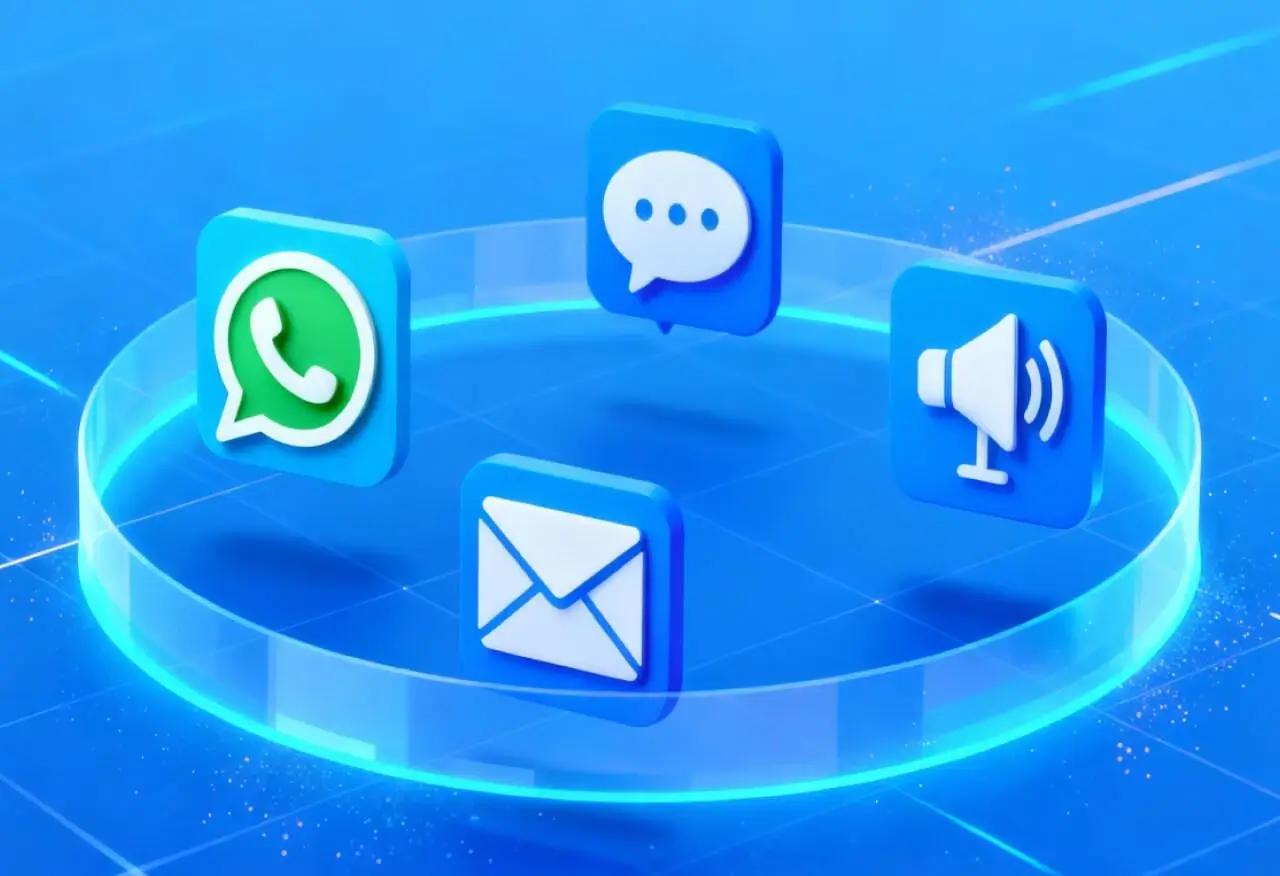
True Omnichannel Integration means all channels operate around a single user profile:
- Email: Long-term relationship maintenance.
- SMS/WhatsApp: Time-sensitive alerts.
- In-app/Push: Instant behavioral feedback.
Connecting the Operations Ecosystem
Email has transitioned from a mere tool to an Operations Hub—acting as an identity system, notification center, and data feedback node.
Summary
By 2026, email marketing is no longer a simple delivery tool but a sophisticated operations hub driven by AI-powered deep personalization, integrated interactivity, and lightweight design. As customer acquisition costs (CAC) soar, email serves as a brand-controlled Private Traffic channel. Its "moat" lies not only in content relevancy but in technical compliance and omnichannel data synergy. Only by building a complete system—from Domain Reputation to Lifecycle Automation—can enterprises break through complex anti-spam mechanisms and consistently realize high-ROI value.
uSpeedo Email Tool empowers enterprises with millisecond-level real-time delivery, secure Key Authentication foundations, and Intelligent Warming for reputation protection. Combined with an easy-to-use editor for efficient creation, uSpeedo helps brands solve delivery challenges, reduce operational costs, and achieve effective delivery with deep value cultivation.