
Demystifying Email Marketing Analytics: What You Need to Know About Tracking Metrics
 USpeedo
 Knowledge Guides
 16 Jan, 2026
At first glance, email marketing analytics may seem intimidating, but fear not! In this article, we will demystify this world, breaking it down into simple, understandable terms. By tracking various metrics, you will gain a deeper understanding of your audience, their preferences, and their engagement with your emails. We will explore the key metrics you need to know, how to track and interpret them, and most importantly, how to use this data to improve the success of your email marketing campaigns, increasing efficiency and driving conversion from brand awareness to higher brand sales.

Open Rate
The Open Rate indicates the percentage of total recipients who opened the email. A high open rate signals that your subject line and preview text are enticing recipients to engage with your message.
Calculation:

Example: If you sent 1,000 emails and 500 were opened, the open rate is 50%.
Factors Influencing Open Rates:
- Subject Line: Needs to create curiosity and convey value. Personalized names, triggers like "alert" or "exclusive," questions, and conveyed benefits often lift open rates.
- Sender Name: Recipients are more likely to open emails from recognized and trusted senders.
- Email List Segmentation: Targeted emails aligned with subscriber preferences have higher open rates.
- Email Design and Copy: A clean, mobile-friendly design with simple copy and clear calls-to-action (CTAs) can improve opens.
- Email Deliverability: If your email is judged as spam or promotional by the ISP (e.g., Google, Yahoo, Outlook), the probability of it being opened is significantly reduced.
Strategies to Boost Open Rates:
- A/B test different subject lines and previews, then compile and apply the resulting insights.
- Send more personalized and relevant emails through segmentation. Use tools like AI to help you empathize with your target readers to determine the kind of content they prefer.
- Optimize design and copy for ease of reading on mobile. Consider using specialized email editors like uSpeedo, Beefree, or Stripo.
- Analyze open rate reports and apply insights. Use a professional and reliable email management tool that ideally offers both email address warm-up and sending data detection.
- Be mindful of reducing the frequency of typical marketing language in titles and content.

Click-Through Rate (CTR)
The Click-Through Rate (CTR) measures the percentage of recipients who engage with an email by clicking on one or more links. A high CTR indicates your content resonates with subscribers and drives traffic, making it the core metric for evaluating email marketing efficiency.
Factors Influencing CTR:
- Relevant subject lines that create curiosity.
- Segmented and personalized content matched to subscriber interests and needs.
- Clear, motivating calls-to-action (CTAs).
- Well-formatted, scannable email copy and design.
- Strategic link placement in the email body.
- Timing emails when engagement is highest.
Strategies to Boost CTR:
To improve CTR, focus on crafting targeted subject lines, optimizing content for readability and visual appeal, and placing CTAs strategically. A/B test different subject lines, layouts, and CTAs.
Benchmarking:
The industry average CTR for email campaigns falls between 2-3%. If yours is significantly lower, examine your entire email strategy. Click here to start optimizing your existing email layout, content, and credibility.
Conversion Rate
The Conversion Rate measures the percentage of recipients who performed a desired action after receiving the email (e.g., making a purchase, signing up).
Analysis and Improvement of Email Concersion Rate:
Segment your list and analyze conversion metrics for each campaign, rather than just overall averages, to identify underperforming areas. Test different subject lines, content formats, and CTAs for each segment. Optimize confirmation pages to reduce drop-offs.
Benchmarking of Email Concersion Rate:
While Open and CTR provide useful data, the Conversion Rate reveals the tangible impact and Return on Investment (ROI) of your emails. Industry averages are typically 2-3%, and 3-5% for e-commerce. Benchmark against your industry to set realistic goals.
Return on Investment (ROI)
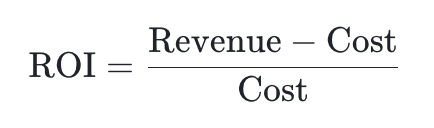
Return on Investment (ROI) is a crucial metric for determining the effectiveness of email marketing spend, measuring the return generated per dollar invested.
Calculation:
How to Increase the ROI of Marketing Emails:
Set clear objectives and metrics. Ensure accurate tracking of conversions, revenue, and costs. Strategies like segmentation, A/B testing, and automated follow-up campaigns improve conversion rates and ROI. Tracking ROI over time helps you identify best-performing campaigns and guides future investments towards higher returns.

Bounce Rate
The Bounce Rate is the percentage of emails that 'bounce' or fail to be delivered. A high bounce rate signals issues with email deliverability and list hygiene. The ideal benchmark is under 2%. Exceeding 5% requires immediate action.
Bounce Categories:
- Hard Bounces: Permanent failures (e.g., non-existent addresses). They severely impact sender reputation and deliverability.
- Soft Bounces: Temporary failures (e.g., full mailboxes, unavailable servers). Repeated soft bounces also hamper deliverability.
Strategies to Reduce Bounce Rates:
- Regularly cleanse subscriber lists of invalid, inactive, or unengaged addresses.
- Avoid sending to spam traps.
- Use double opt-in to keep addresses engaged and updated.
- Identify causes through bounce analyses and failed email logs.
- Focus on Email Warm-up: Sending a large volume of emails immediately from a new address can flag it as spam by the ISP, restricting deliverability.
- Monitor Send Metrics: Adjust writing standards and check hygiene in real-time if an abnormal change in open rate or CTR occurs.
- Ensure High Email Security: Focus on security identification standards like SPF, DKIM, and DMARC, as a low security coefficient will limit sending success.
Tool to Reduce Boucne Rates:
If you are not an expert in bulk sending or email security coefficient, use a professional and reliable email management tool that ideally offers email address warm-up, security coefficient detection, and sending data monitoring features.
Unsubscribe Rate
The Unsubscribe Rate is the percentage of subscribers who opt out over a given period. A high rate indicates your content is not relevant or your sending frequency is too high, hurting your sender reputation.
Calculation:

Strategies to Reduce Unsubscribe Rates:
- Segmentation: Send tailored, relevant content based on demographics, interests, and engagement.
- Content Relevance: Analyze campaign performance to eliminate low-performing content.
- Email Frequency: Avoid oversaturation. Use automation to offer subscribers options like "daily digest" vs. "weekly roundup."
Analyze this trend alongside other metrics. If the unsubscribe rate rises while other metrics remain steady, content relevance, segmentation, and frequency are likely the culprits.
List Growth Rate
The List Growth Rate measures the percentage increase or decrease in your subscriber list over a specific period, evaluating the effectiveness of your lead generation and list-building efforts.
Calculation:

Example: (5,500 - 5,000) / 5,000 x 100 = 10% monthly list growth.
Factors Influencing List Growth:
- The quality and relevance of your content.
- Your lead nurturing and re-engagement efforts.
- The effectiveness of your calls-to-action (CTAs).
- Incentives offered (freebies, discounts).
- Your website's ease of subscribing (frictionless process).
Strategies to Boost List Growth Rate:
- Publish high-quality content consistently.
- Send re-engagement emails to inactive subscribers.
- A/B test opt-in forms and CTAs.
- Offer lead magnets (ebooks, coupons).
- Simplify and streamline the subscription process.

Summary
This article summarized and categorized key email marketing metrics to help you boost efficiency, focusing on User Engagement & Conversion (like Open Rate, CTR, Conversion Rate, and ROI) while also prioritizing List Health & Deliverability (such as Unsubscribe Rate, List Growth Rate, and the critical Bounce Rate). To effectively manage and optimize these complex indicators, uSpeedo offers a professional, all-in-one solution featuring: Email Address Warm-up (ensuring high deliverability), Security Coefficient Detection (securing SPF, DKIM, etc.), and Real-time Sending Data Monitoring, helping you translate analysis into tangible business success.